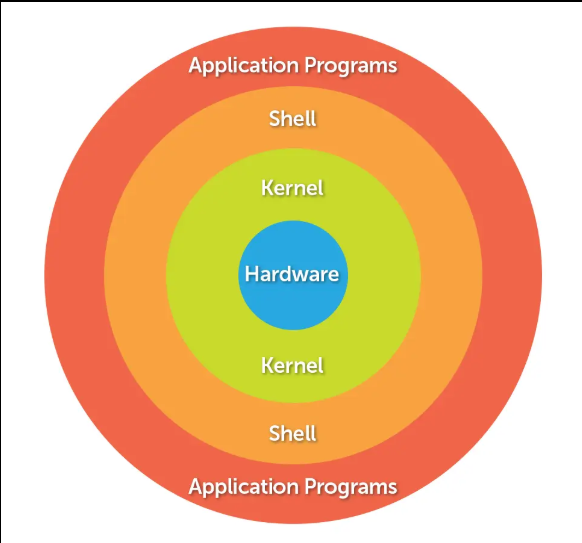
UNIX Architecture is layer-based, meaning each layer has a specific role and interacts with others in a structured way.
🔹 Layers of UNIX Architecture
1️⃣ Hardware
- Physical components like CPU, memory, disk, keyboard, mouse
- UNIX does not allow users to access hardware directly
2️⃣ Kernel (Heart of UNIX)
- Core part of UNIX
- Manages system resources
Main functions of Kernel:
- 🧠 Process management
- 💾 Memory management
- 📂 File system management
- 🔌 Device management
- 🔐 Security & access control
➡️ Kernel acts as a bridge between hardware and users
3️⃣ Shell (Command Interpreter)
- Interface between user and kernel
- Takes user commands and passes them to the kernel
Examples of shells:
sh(Bourne Shell)bash(Bourne Again Shell)csh,ksh
Example command:
ls
4️⃣ Utilities / Commands
- Programs that perform tasks
- Examples:
ls→ list filescp→ copy filesrm→ delete filescat→ display file content
5️⃣ Users
- End users interact with the system using the shell
- Can be:
- Normal user
- Super user (root)
🔁 Working Flow of UNIX Architecture
User → Shell → Kernel → Hardware
✅ Advantages of UNIX Architecture
- Modular and well-structured
- Secure and stable
- Supports multi-user & multitasking
- Easy to maintain and extend